The end of October is the one week of the year when a pumpkin walks into the lab and nobody asks why. It is worth using: the two experiments below are seasonal on the outside, but inside they are curriculum — chemical kinetics and catalysis in one, free fall and acceleration in the other — with the same data collection you would use in any other lab.
Both come from the Vernier Science Education blog and run on the Go Direct® ecosystem Districalc distributes across Latin America: the “puking pumpkin” for chemistry and the “great pumpkin drop” for physics. The first takes twenty minutes over a tray; the second needs a safe height, a camera and a clear yard.
Why run a seasonal experiment at all?
A seasonal lab does not replace the one in the book: it comes before it. A pumpkin spewing foam is visible from the back of the room, and that visible reaction is what leaves the class asking what just happened — which is exactly where chemical kinetics starts. The drop works the same way: nobody argues about whether an object falls, but they will argue about whether it falls faster when it is heavier, and that argument carries the whole kinematics unit.
The second reason is practical. Both experiments work as a teacher demo or as a student activity, and both can end in data. That is the difference between a show and a lab: if you measure, there is something to graph, to argue about and to assess. The temperature probe turns the foam into a curve; video analysis turns the drop into a parabola.
Both activities come from Vernier Science Education and were published on their blog. Here they are adapted to the equipment we distribute in the region, with the safety notes worth underlining in a school lab.
Experiment 1 · The puking pumpkin (chemistry)
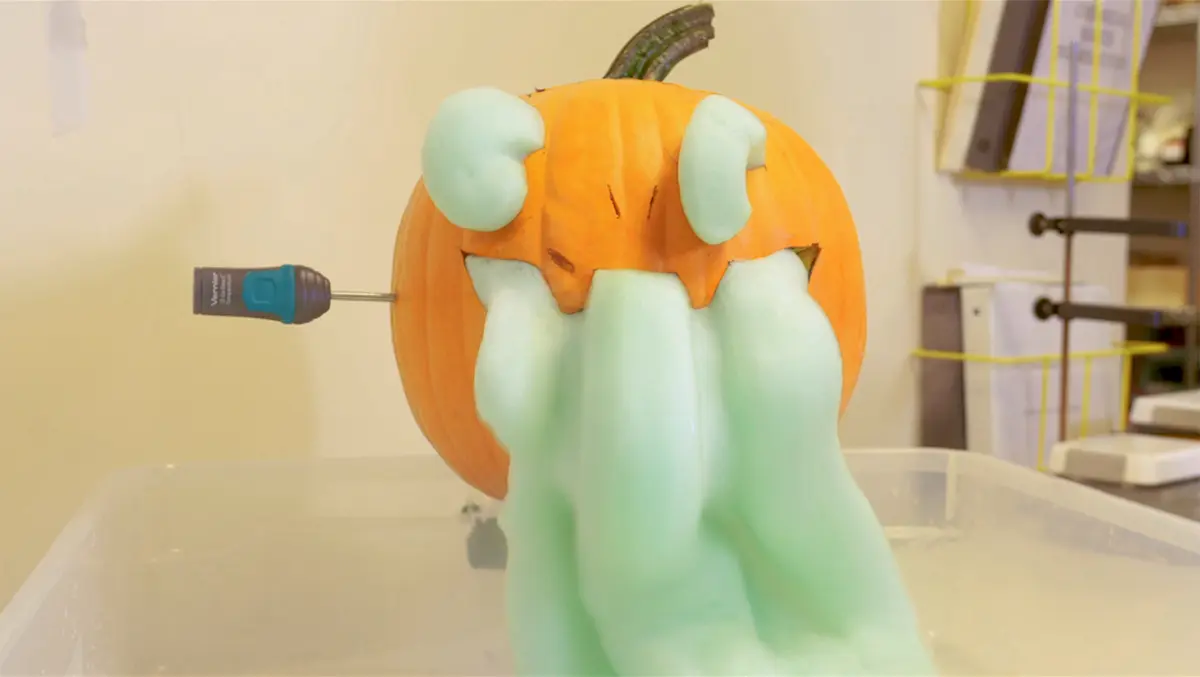
The setup: inside a carved pumpkin with a lid sits a cup of hydrogen peroxide, food colouring and dish soap. Add saturated potassium iodide, put the lid back on, and the pumpkin spews foam out of its mouth and eyes.
What you need
- A carved pumpkin with a lid, standing in a tray or tub that will catch the foam
- 60 mL of 30% hydrogen peroxide in a beaker
- 20 mL of saturated potassium iodide (KI)
- Food colouring and dish soap
- A Go Direct® Temperature Probe and Vernier Graphical Analysis (or a LabQuest interface)
What is happening
Hydrogen peroxide decomposes into water and oxygen. It does this on its own, but slowly; potassium iodide acts as a catalyst and speeds it up until it becomes visible. The dish soap traps the released oxygen as bubbles, and that is the foam pouring out of the pumpkin. Because the reaction is exothermic, the temperature probe records the rise as it happens: that is the measurement that turns the demo into a lab.
Questions for the class
- Does the temperature change during the reaction? What does that say about the energy released?
- What is the dish soap for? What would you see without it?
- If potassium iodide is a catalyst, is it consumed in the reaction? How could you check?
Safety: 30% hydrogen peroxide is corrosive and is not the bottle from the pharmacy. Goggles and gloves for everyone, the teacher handles the bottle, a ventilated area and a tray to catch the foam. If your lab does not keep concentrated peroxide, the mild version — 3% peroxide with yeast as the catalyst — shows the same principle with slower foam.
Equipment: Go Direct® Temperature Probe and Vernier Graphical Analysis.
The same content without the pumpkin: Vernier publishes The Decomposition of Hydrogen Peroxide (CHEM-A-12) and Endothermic and Exothermic Reactions (CWV-1), which cover catalytic decomposition and the energy balance with the usual lab setup.
Experiment 2 · The great pumpkin drop (physics)
The setup: several pumpkins — different sizes, carved and uncarved — are dropped from a safe height onto a clear surface, each drop is filmed, and the video is analysed frame by frame.
What you need
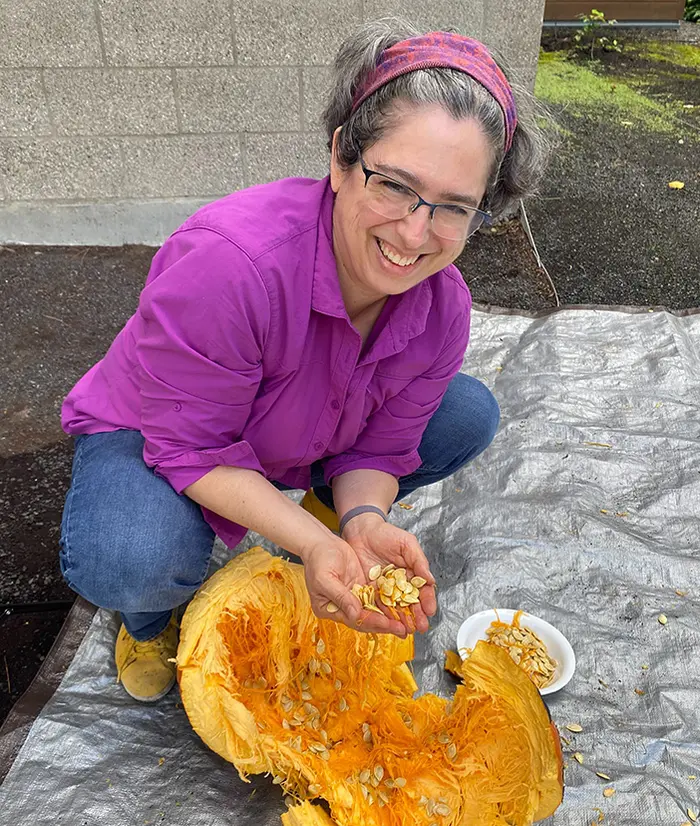
- Several pumpkins of different sizes, carved or whole
- A scale object of known length, in a colour that stands out
- A camera, tablet or phone, ideally on a tripod
- Vernier Video Analysis
- Optional: a tarp or plastic sheet to keep the cleanup contained
What is happening
A fall is too fast for the eye: the class sees the impact, not the acceleration. Video fixes that. By marking the pumpkin's position frame by frame and setting the scale with an object of known length, the software gives position against time and, from there, velocity and acceleration. The number that comes out is close to 9.8 m/s², and it comes out much the same for the big pumpkin, the small one and the carved one: that is what there is to discuss.
How to film so the analysis works
- Keep the camera still and far from the drop, zoomed in: that reduces perspective distortion.
- Put the scale object in the same plane as the drop, neither in front of it nor behind it.
- Mark the pumpkin in a contrasting colour so it can be tracked frame by frame.
- Good light, and the highest frame rate the device allows.
Questions for the class
- Will the carved pumpkin fall faster than the whole one? Will the heavier one beat the lighter one?
- Is the speed constant or increasing? How does that difference look on the graph?
- How far is the measured value from 9.8 m/s², and what could explain the difference?
Equipment: Vernier Video Analysis, plus the camera or phone the students already carry.
Measuring gravity by more than one route
The pumpkin drop is one of several ways to reach the same number, and it is worth doing at least two so the class sees the value does not depend on the method: with the Go Direct® Motion Detector tracking a ball tossed upwards, with a Go Direct® Photogate and a picket fence in free fall, and with video analysis. Vernier gathers several of these in its Measuring g Three Ways webinar.
Fitting it to the level of the course
- Entry level (upper primary and early secondary): the pumpkin as a teacher demo, with the temperature question; the drop is filmed and described as “it falls faster and faster”, with no calculation.
- Middle level (upper secondary): both experiments as a student activity, with the temperature curve graphed and the acceleration taken from the slope of the velocity graph.
- Advanced level (AP or IB and first-year university): in chemistry, compare the temperature rise with different amounts of catalyst; in physics, contrast carved and whole pumpkins to discuss air resistance, and estimate the error of the measured value against 9.8 m/s².
A regional note: the Halloween pumpkin is not compulsory. Any large gourd will do — zapallo in the Southern Cone, auyama in Colombia and Venezuela, calabaza in Mexico. What matters is a cavity with a lid for the chemistry experiment, and enough sturdiness to carry it to the drop site for the physics one. And if the date does not fit the school calendar, both experiments work in any week of the year: the content is not seasonal.
The equipment for both experiments
A lab already working with Go Direct® sensors can run the chemistry experiment without buying anything extra; the physics one only needs the video analysis licence. Below is each component with its page in the regional store, where prices for Chile are listed.
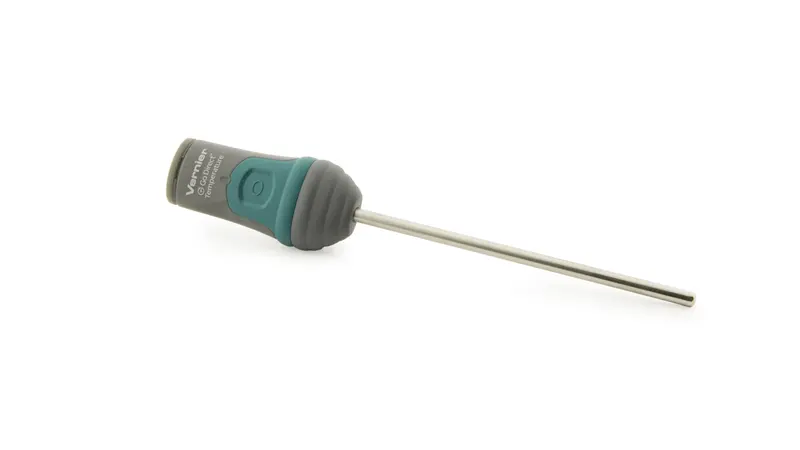
Go Direct® Sensor de Temperatura
Records the temperature rise inside the pumpkin and delivers the curve that shows the reaction is exothermic.
View on TecnologíasEducativas.cl ↗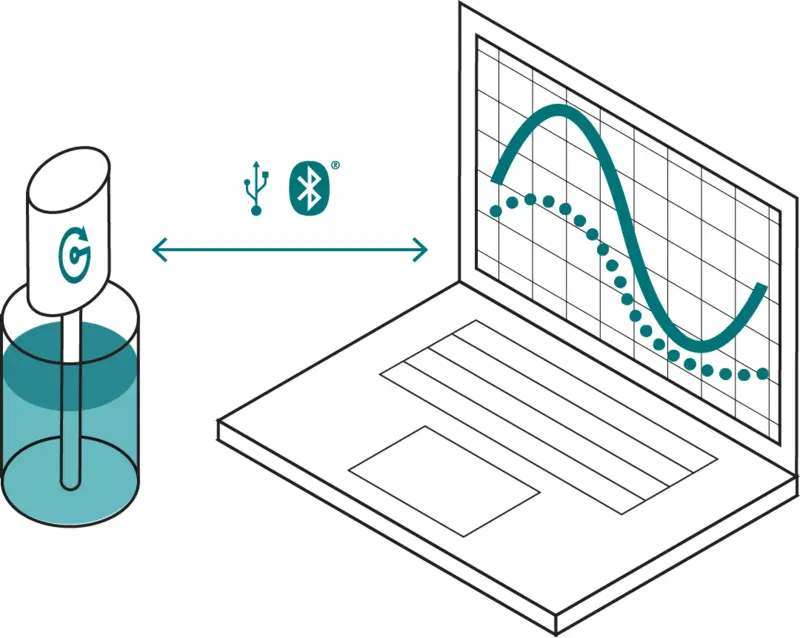
Vernier Graphical Analysis™
Free data collection and analysis app for the chemistry experiment; the Pro edition adds curve fitting and video analysis.
View on TecnologíasEducativas.cl ↗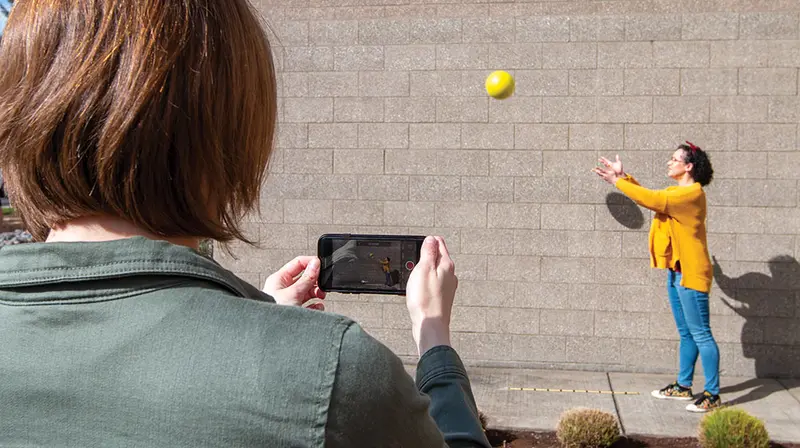
Vernier Video Analysis™
Marks the pumpkin frame by frame in the video of the drop and returns position, velocity and acceleration. Site licence, unlimited seats.
View on TecnologíasEducativas.cl ↗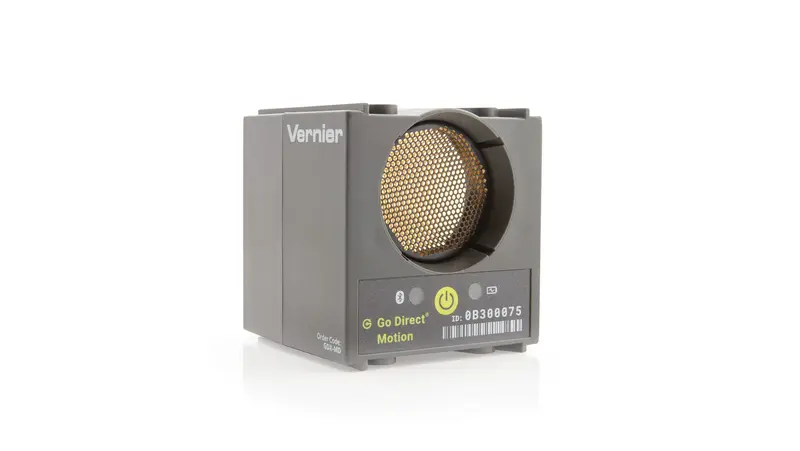
Go Direct® Detector de Movimiento
Measures position, velocity and acceleration by ultrasound: the second route to the acceleration due to gravity, with no camera.
View on TecnologíasEducativas.cl ↗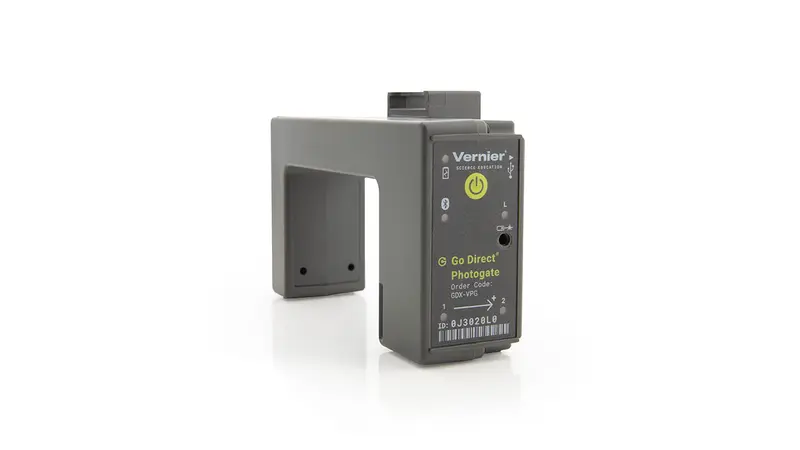
Go Direct® Foto-celda
Two optical gates for picket-fence free fall, collisions and pendulums, timed to the millisecond.
View on TecnologíasEducativas.cl ↗Districalc: hands-on physics and chemistry across Latin America
Districalc is an authorised Vernier distributor and has operated in more than 20 Latin American countries since 1981. We supply the Go Direct® sensors, the software licences and the lab books, and we back the rollout with teacher training and local technical support.
More experiments: the chemistry catalogue and the physics catalogue hold the rest of the Vernier ecosystem, and the teacher training page describes the training that comes with every rollout.
Want to run both of these before the term ends? Write to us: we put together the equipment list for the level of your course and the lab you already have.
Further reading: Vernier's original post Smashing Squash and Regurgitating Gourds, their five tips for collecting video worth analysing, and the Accelerated Motion experiment, meant to be done before the drop.
Ready to bring these experiments into your lab?
Districalc supplies the Vernier sensors, the software licences, the teacher training and the technical support to put these activities into your curriculum — anywhere in Latin America.
Contact UsFrequently asked questions
What chemical reaction happens in the puking pumpkin?
Hydrogen peroxide decomposes into water and oxygen. Potassium iodide acts as a catalyst and speeds that decomposition up until it becomes visible; the dish soap traps the oxygen as bubbles and makes the foam that pours out of the pumpkin. The reaction is exothermic, so the Go Direct Temperature Probe records the rise as it happens.
Which hydrogen peroxide is used, and what precautions does it need?
The original setup uses 60 mL of 30% hydrogen peroxide, which is corrosive and is not the pharmacy bottle. It calls for goggles and gloves for everyone present, the teacher handling the bottle, a ventilated area and a tray to catch the foam. A milder version, with 3% peroxide and yeast as the catalyst, shows the same principle at lower risk.
Can it be a student activity, or only a demo?
Both work. As a demo, the teacher sets up one pumpkin and the whole class watches and argues over the temperature data. As an activity, each group carves its own pumpkin and takes its own measurement, with the teacher dispensing the peroxide. The pumpkin drop works the same way: one filmed drop for the whole class, or a video per group to analyse separately.
Do heavier or carved pumpkins fall faster?
No. Near Earth's surface every body accelerates at practically the same rate, about 9.8 m/s², whatever its mass, and the video analysis shows it: the curves for the different pumpkins land almost on top of each other. The differences that do appear come from air resistance and measurement error, and they are exactly what is worth discussing afterwards.
What do you need to analyse the drop on video?
A camera, tablet or phone; a scale object of known length placed in the plane of the drop; and Vernier Video Analysis to mark the position frame by frame. The camera must be still, far away and zoomed in, because perspective distortion is the most common error in this analysis. The software runs on computers, Chromebooks, tablets and phones.